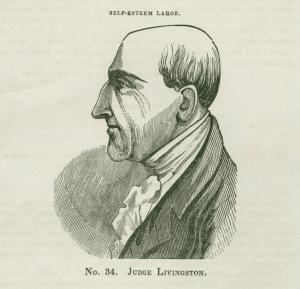
The Miriam and Ira D. Wallach Division of Art, Prints and Photographs: Print Collection, The New York Public Library. Brockholst Livingston, 1757-1823
Wartime aide-de-camp to George Washington?
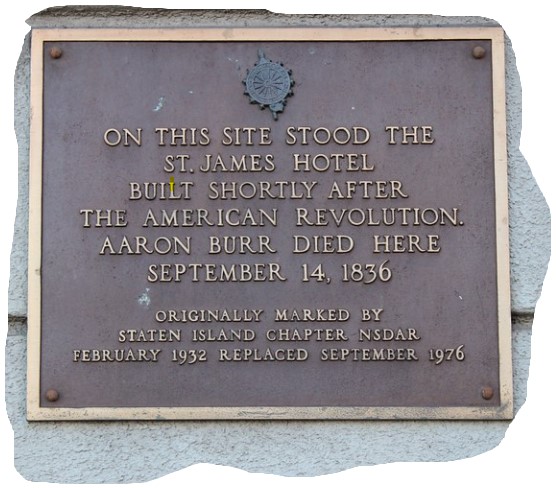
Involvement with Aaron Burr?
Fatal Duel in New Jersey?
No, it’s not the guy on the ten-dollar bill, founder of The NY Post, and subject of Broadway’s phenomenal hit.
It’s Henry Brockholst Livingston (1757-1823), U.S. Supreme Court Justice and participant in a 1798 duel that killed James Jones!
But Brockholst, as he preferred to be called, was more than just acquainted with the more famous duelists. In 1800, he was part of the legal dream team in the first sensational trials of our republic – The Trial of Levi Weeks for the Murder of Gulielma Sands. American State Trials states that:
“…probably no other person tried for a felony at any time or in any part of the country had such an eminent counsel… Livingston… Hamilton… Burr”.
And, while Lin-Manuel Miranda’s “Hamilton” Act I song “Non-Stop” mentions the Weeks trial, Livingston is not mentioned!
Meeting in Battery Park, a humiliating nose-tweaking and caning of Livingston by Jones ensued, and the resulting duel set for the following day.
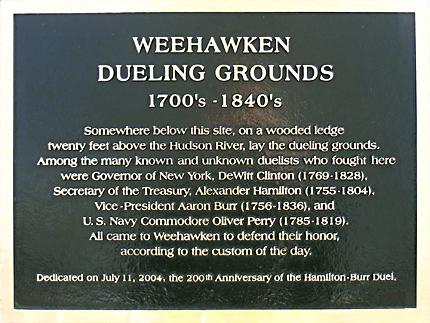
Jones met his death in the most popular dueling spot of the day: Hoboken, an area now known as Weehawken and later the site of the Burr Hamilton duels. Newspapers of the day reported that the men fired at the same time and Jones received a ball to his groin which opened a main artery and resulting in his bleeding to death within minutes .
2004 Plaque…Where is BROCKHOLST?????
And, while Brockholst Livingston has yet to be on the Great White Way or pictured on currency, he did go on to receive a recess appointment to the U.S. Supreme Court by Thomas Jefferson in 1806 His brief obituary (Daily Intelligencer, 3/19/1823) made no mention of the long-forgotten duel, but simply stated that he was a “…finished gentleman, and a truly benevolent man”
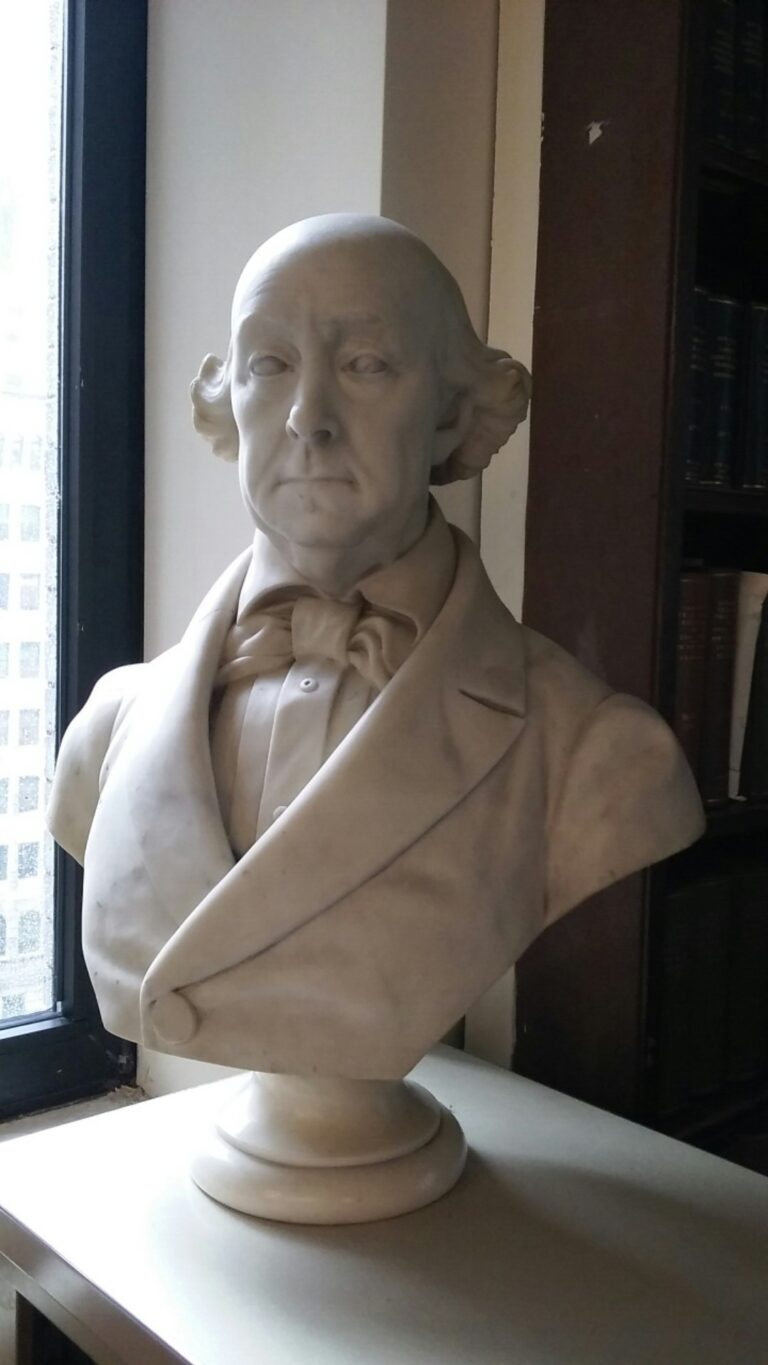
For those of you who made it to the end of the article and are wondering about the connection to The New York Law Institute, our website mentions Brockholst Livingston, Burr, and Hamilton as being part of our famous Provenance Collection. And one of the mysterious NYLI bust identities discovered in the Spring… Francis Brockholst Cutting… is a relation to the duelist Supreme Court Justice Henry Brockholst Livingston.
Just one more way that NYLI offers a glimpse into the past, and a chance to speculate about similarities to the present.
From the Series: Moog’s Irregularly Published Historical Vignettes of New York Legal History taken from the Collections of the New York Law Institute
Thanks to Lin-Manuel’s musical, Alexander Hamilton is again known for so much more than the face of the ten-dollar bill…. But did you know that Alexander Hamilton Jr. was Madame Jumel‘s attorney in her divorce suit against aging husband Aaron Burr? Yes, that Burr of the famous duel! And Burr’s attorney was none other than…
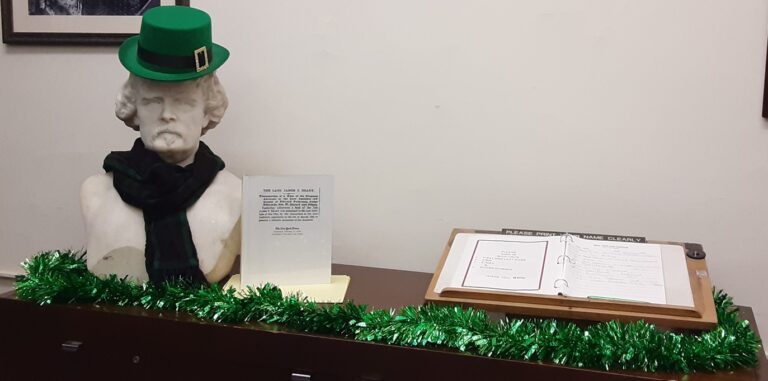
Post authored by Emily Moog NYLI Research Librarian Emily Moog was reviewing 19th Century newspapers regarding its history when she discovered the identities of the two unknown busts residing in its reading room They are James T. Brady and Francis Brockhoist Cutting ! James T. Brady bust currently at NYLI and painting by Joseph Alexander…
Inspired by both the American and French Revolutions, particularly by the writings of Thomas Paine, historians consider the Irish Rebellion of 1798 as the greatest threat to English Rule between 1641 revolt and the Easter Uprising of 1916. And the participants and sons of this rebellion would help shape 19th Century American Law and help…
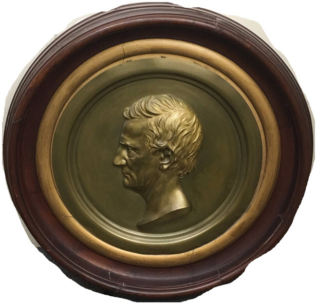
Upon entering The New York Law Institute’s offices at 120 Broadway, visitors may notice the foyer area medallions depicting two men in profile…… Who are these dudes, anyway? Before the advent of the “Cravath system” , as described in John Oller‘s history White Shoe: How a New Breed of Wall Street Lawyers Changed Big Business—and…
When Americans think of famous defense attorneys, they often think of those with celebrity defendants . The more historically minded think of Clarence Darrow. And is there a better known fictional defense attorney than T.V.’s Perry Mason? Former NYLI President James T. Brady had celebrity clients, set a historical legal precedent, and was one of…
Irish immigrants have been part of the American landscape since before the American Revolution… And some early & notable members of The NY Law Institute were Irish American Lawyers. There’s Thomas Addis Emmet…. Thomas Addis Emmet , older brother of famed Robert, was an early legal adviser to the Society of the United Irishmen . Emigrating to America after…